PDF Reader: Easy Fast Viewer
- 4.4
- Rating
- 5.00M
- Installs
- Free
- Price
 Analysis by App-foxy
Reading a PDF on a phone sounds simple until the document is crowded, the text is tiny, or you need to find one detail quickly. PDF Reader: Easy Fast Viewer is a free tools app from yaohuo that focuses on that everyday task rather than trying to become a complete office suite. I tested it with the mindset of someone who wants to open a document, move through it comfortably, and get back to work without a complicated setup. My overall impression is that it is most useful as a straightforward reader, especially for people who want a lighter alternative to a large productivity app.
The app is available for Android devices running version 8.0 or later, and it is rated for Everyone. Its current version is 1.1.5. That combination makes it approachable for many phone and tablet owners, including people using an older device that may not handle a large document-management suite particularly well. It is free to use, which removes the most obvious barrier for students, casual readers, and anyone who only opens PDFs occasionally.
Reading comfortably starts with simple navigation
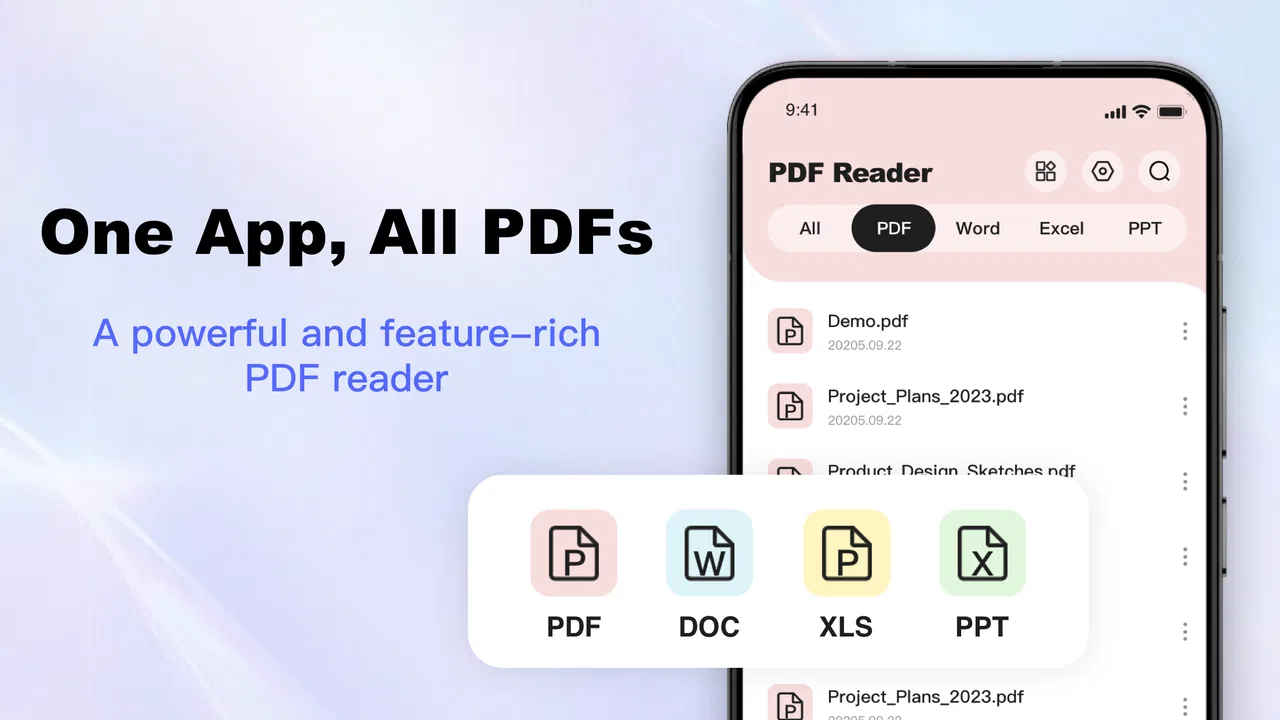
The strongest part of the experience is the basic reading workflow. I can imagine opening the app when someone sends me a timetable, an instruction sheet, a receipt, or a form and wanting to read it immediately rather than organize it into a larger digital filing system. A dedicated PDF reader is often better for this narrow job than an app packed with editing, signing, cloud, and collaboration tools that I may never touch.
You May Also Like

 Blood Strike: 2.5 Anniversary
Blood Strike’s Loadouts Turn Every Drop Into a Tactical Gamble
A close look at Blood Strike’s custom loadouts: how fast access to signature weapons reshapes its battle royale rhythm, rewards preparation, and narrows the gap between fights.

 Pandora - Music & Podcasts
Pandora’s Music Is Easy to Start, but Harder to Recover
Pandora’s strength is its low-effort path from a seed to a station. Its weak spot is how much confidence it asks you to place in connection, setup, and quiet recovery.

 8 Ball Pool
 Is Built on Rivalries, Rematches, and Routine
A close look at the rivalries, rematches, shared routines, and unanswered safety questions that turn a quick pool match into a persistent mobile community.

 Samsung Music
’s Quiet Strength Is Playing What You Already Own
Its reach comes less from spectacle than from dependable access to a personal library. That simplicity is both the app’s strongest retention engine and its ceiling.

 AccuWeather: Weather Radar
AccuWeather Review: A Quick, Clear Forecast for Everyday Decisions
For everyday plans, the best forecast is the one you can understand quickly. AccuWeather makes rain timing, radar, and local conditions easy to act on, with a few trade-offs.

 Hill Climb Racing
Why Hill Climb Racing Still Turns Crashes Into One More Run
A tiny car, a bumpy hill and one more upgrade: Hill Climb Racing keeps resurfacing because its simple chaos makes every near-miss feel personal.
More From Our News Desk



That simplicity matters for people who find busy interfaces tiring or confusing. When an app has too many controls competing for attention, the document itself becomes secondary. PDF Reader: Easy Fast Viewer is positioned around viewing, so its value comes from reducing the distance between launching the app and seeing the page. For a reader with limited time, limited concentration, or a preference for familiar routines, that directness can be more helpful than a long feature list.
I would use it for a practical sequence like this: download a school handout, open it in the reader, scan the headings, move to the relevant page, and keep the phone beside me while completing the task. The same workflow suits a transport document, a work procedure, or a medical appointment letter that I need to consult briefly. The app does not need to turn each of those situations into a project. It needs to make the document available without unnecessary friction.
On a small screen, readability is not only about the size of the letters. It also depends on how quickly I can reposition a page and whether navigation feels predictable. A document designed for paper can be awkward on a phone because its margins, columns, and tables were never meant for a narrow display. A useful reader should therefore be judged by how well it supports repeated zooming, panning, and page changes, not just by whether it technically opens a file.
That is where expectations should remain realistic. A viewing app cannot redesign a badly formatted PDF into a comfortable mobile document. If the original file uses scanned pages, dense columns, decorative fonts, or low contrast, the reading experience will still depend heavily on the source. I would not choose this app expecting it to repair the layout or transform every document into flowing text. Its role is to provide access to the existing PDF, not replace a document-conversion tool.
For users who rely on visual scanning, a simple reader can still be useful because it keeps the main task clear: locate the page, enlarge what matters, and return to the document. I find that more practical than opening a full office app for a file I only need to inspect. On the other hand, someone who regularly annotates research papers, fills complex forms, or compares several documents side by side may quickly outgrow a viewer-first design.
Small habits that make phone reading easier
My first tip is to decide whether the document is for quick reference or sustained reading before opening it. For a short notice or a few-page guide, a phone is convenient. For a long report, I would switch to a tablet or larger screen if possible. That is not a failure of the app; it is a sensible match between the document and the device.
My second tip is to rotate the device when a PDF contains wide tables or landscape pages. A portrait screen may be comfortable for ordinary paragraphs but frustrating for spreadsheets, schedules, and diagrams. Changing orientation can reduce repeated horizontal movement and make the relationship between columns easier to understand. This is especially useful for readers who lose their place when they must pan back and forth.
A third useful habit is to treat page memory as part of the workflow rather than assuming I will remember where I stopped. When reading is interrupted by a call, a message, or a change of task, I make a mental note of the heading or page before closing the document. That small step is valuable for users with attention difficulties or anyone moving between several responsibilities. It also exposes an important trade-off: a basic viewer may be excellent for immediate access without offering the deeper study tools found in specialized reading apps.
How it fits different abilities and situations
I find that a focused PDF reader can be useful across very different situations, but comfort depends on the person, the device, and the document—not just the app. For a short handout, a phone may be enough; for small print or sustained reading, a larger screen and fewer repeated gestures can make the task much easier. That practical distinction helps clarify who benefits most and where another kind of reader may be a better fit.
Motor comfort and control
Phone reading involves repeated gestures: tapping, swiping, dragging a zoomed page, and sometimes rotating the device. For someone with limited fine-motor control, tremors, joint pain, or fatigue, those actions can become the real barrier. A viewer that keeps the interaction focused on the document is easier to approach than one that places many small buttons around the page, but the physical demands of handling a PDF do not disappear.
I would recommend using the largest comfortable device available and avoiding unnecessary repeated adjustments. A tablet can reduce the amount of zooming and panning, while a stand can help someone who cannot comfortably hold a phone for long periods. These are simple environmental changes, yet they may have more impact than choosing between two similar viewer apps.
There is also a difference between occasional access and extended reading. Someone with good hand control may find a short document effortless but experience strain after several minutes of constant page movement. In that case, a larger display, an external input method, or a reader designed around continuous text may be a better solution. PDF Reader: Easy Fast Viewer makes sense when the priority is opening and consulting files, not when the phone is being used as a full-time reading workstation.
Visual and sensory considerations
People with low vision often need more than ordinary page viewing. Enlarging text can help, but it may also force more horizontal movement, split a sentence across the screen, or make a table difficult to understand. The quality of the original PDF remains crucial. A text-based document may respond better to zooming than a scanned image, while a page with poor contrast can remain tiring even when enlarged.
I would approach this app as one part of a personal setup rather than an accessibility guarantee. The phone’s own display settings, system magnification, contrast preferences, and screen size may determine whether the experience is comfortable. If a reader depends on reliable text reflow, optical character recognition, spoken content, or advanced navigation landmarks, I would look for an app that clearly specializes in those functions instead of assuming a general viewer will provide them.
For readers who are sensitive to visual clutter, a focused PDF tool has a quiet advantage: the document remains the central object. That can make short tasks less mentally demanding. But a clean interface does not automatically solve every sensory issue. Bright pages, dense layouts, animated system elements, or a document full of tiny labels can still cause fatigue. I would test the kinds of PDFs I actually need before making it my only reading option.
Access while moving between places
The app is particularly easy to justify for situational access. I might need to check a downloaded ticket, read a building guide before entering a room, or review a work instruction while away from my desk. In those moments, I value speed and familiarity more than advanced editing. A free reader also makes sense for a household that needs a simple way to open occasional documents without paying for a broader subscription.
Students can use this kind of app for handouts and reference material, but their needs vary. If the main task is reading a few pages before class, a dedicated viewer is sensible. If the work involves highlighting sources, adding comments, extracting quotations, or managing a large research library, a study-focused PDF application will likely be more efficient. I would not confuse “opens documents easily” with “supports an entire academic workflow.”
The same distinction applies at work. A person checking procedures or viewing a received attachment may appreciate the uncomplicated approach. Someone responsible for approving, signing, redacting, or revising documents should compare it with a full document suite. The right choice depends less on the word PDF and more on what I need to do after the page appears.
Its broad adoption suggests that this straightforward purpose resonates with many Android users: the app has passed five million installs, with an average rating of 4.4 from around nineteen thousand ratings and roughly three hundred eighty written reviews. Those figures do not prove that every document or device combination will feel perfect, but they do indicate that the basic concept has found a substantial audience. I read that as evidence of practical usefulness rather than a reason to ignore individual needs.
Where the usual alternatives are stronger
Compared with a browser’s built-in document handling, a dedicated reader can feel more intentional. I am less likely to lose the file among open tabs, and the experience is centered on reading rather than general web activity. Compared with a complete office application, this app is easier to understand when I only need to view a PDF. That is its clearest trade-off: less complexity can mean fewer tools for advanced work.
A cloud-based document service may be preferable for people who constantly move between devices, share files with a team, or need collaborative comments. A specialized accessibility reader may be preferable for people who depend on text extraction, reflow, or spoken navigation. A research application may be preferable for heavy annotation. I would choose PDF Reader: Easy Fast Viewer when opening and consulting are the main jobs, not when those larger workflows are essential.
Remaining barriers before making it your main reader
The most important barrier is the document itself. PDFs are fixed-layout files, and fixed layouts can be difficult on a small screen. A page may look fine at normal size but become tiring when enlarged. A scan may contain no selectable text. A form may be visually clear but awkward to complete on a phone. These are limitations of the format and the surrounding workflow, yet they affect how useful the app feels in daily life.
The second barrier is the gap between “free viewer” and “complete document tool.” If I expect editing, annotation, signing, conversion, or sophisticated file organization, disappointment is likely. I would rather choose a tool that openly matches my main task than install a simple reader and judge it for jobs it was never meant to handle.
The third barrier concerns comfort over time. A quick glance is different from an hour of reading. Users with visual fatigue, attention challenges, or motor limitations should try their own documents in their own environment. A phone held in one hand on a bus creates different demands from a tablet resting on a desk. The app can support access, but it cannot replace good device positioning, suitable lighting, or a document prepared with readable structure.
There is also a practical reason to keep another option available. If a file does not behave as expected, I do not want to be stuck without a way to search, extract text, or complete a form. Keeping a more capable alternative for exceptional documents while using this reader for ordinary viewing is a sensible arrangement. It avoids forcing one app to solve every PDF problem.
My inclusive verdict
After looking at the app through the lens of different abilities and contexts, I see PDF Reader: Easy Fast Viewer as a useful low-commitment choice for straightforward document access. It is free, aimed at Everyone, works on Android from version 8.0 onward, and comes from yaohuo. The current version, 1.1.5, fits its role as a practical tool rather than a large productivity platform.
I would recommend it to someone who wants a direct way to open PDFs, prefers a less crowded experience, and mainly reads short or moderately sized documents. It can also suit families, casual users, and people who need a dependable viewer for occasional reference. Its strongest accessibility quality is its focused purpose: fewer competing tasks can make the first step easier for many readers.
I would suggest looking elsewhere if your reading depends on advanced reflow, dependable spoken navigation, extensive annotation, document editing, or a carefully managed research system. I would also avoid making it the only option for important forms or difficult scanned documents until I had tested those files personally. The best reason to install it is not that it does everything, but that it keeps ordinary PDF viewing uncomplicated.
For me, that is a worthwhile role. When I receive a document and simply need to read it, a focused free tool is often more comfortable than a heavyweight suite. When the document demands editing, accessibility-specific support, or long-session study features, I would switch tools without hesitation. Used within those boundaries, PDF Reader: Easy Fast Viewer is an approachable addition to an Android device and a sensible first reader for people who value quick, uncomplicated access.
FAQs for PDF Reader: Easy Fast Viewer
01What are the main features of PDF Reader: Easy Fast Viewer?
PDF Reader: Easy Fast Viewer offers a range of features including fast document loading, easy navigation, annotation tools, and cloud integration. Users can highlight text, add notes, and bookmark pages for quick reference. The app supports various file formats and provides a user-friendly interface for seamless document management.
02Is PDF Reader: Easy Fast Viewer available for both Android and iOS?
Yes, PDF Reader: Easy Fast Viewer is available for download on both Android and iOS platforms. Users can find it on the Google Play Store for Android devices and the Apple App Store for iOS devices. It ensures compatibility across a wide range of smartphones and tablets.
03Does PDF Reader: Easy Fast Viewer support cloud storage integration?
Absolutely, PDF Reader: Easy Fast Viewer supports integration with popular cloud storage services such as Google Drive, Dropbox, and OneDrive. This feature allows users to easily access their documents across different devices and ensures that their files are backed up and always available when needed.
04Are there any in-app purchases or subscriptions required?
PDF Reader: Easy Fast Viewer offers both free and premium versions. The free version includes basic features, while the premium version, available through in-app purchases, unlocks advanced features such as additional annotation tools and ad-free experience. Users can choose based on their needs and preferences.
05How does PDF Reader: Easy Fast Viewer ensure user privacy and data security?
PDF Reader: Easy Fast Viewer prioritizes user privacy and data security by employing strong encryption protocols for document storage and transfer. The app does not collect personal data unless explicitly provided by the user for account creation or subscription purposes. Regular updates ensure compliance with the latest security standards.
Pros
- User-friendly interface for quick navigation.
- Supports a wide range of file formats.
- Fast loading times even for large files.
- Bookmark feature for easy document access.
- Night mode reduces eye strain during reading.
Cons
- Ads can be intrusive during use.
- Limited editing features in free version.
- Occasional lag with complex documents.
- Requires in-app purchases for premium tools.
- No cloud integration for direct sync.

PDF Reader: Easy Fast Viewer
Gallery